 MepcoOnlineBill
This page explains everything — what a detection bill is, how it is calculated, what triggers it, and exactly what you can and cannot do if you receive one.
What is a Detection Bill?
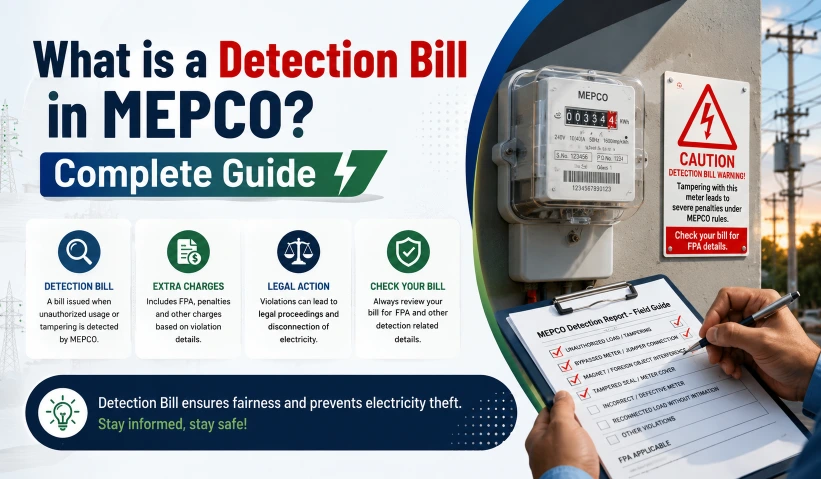
A detection bill (also called a theft bill or tampered meter bill) is a penalty charge issued by the company when an inspection finds evidence of:
- Electricity theft — unauthorized extraction of electricity from the distribution network
- Meter tampering — physical interference with the electricity meter to reduce the recorded reading
- Kunda connection (illegal hook) — an unauthorized direct connection from the distribution line, bypassing the meter entirely
- Unauthorized load extension — using more electrical load than what was sanctioned in your connection application, without approval
- Bypassed meter — electricity flowing to premises without passing through the registered meter
It is not a regular monthly bill. It is a calculated penalty for electricity allegedly consumed illegally, billed retroactively for the period during which the unauthorized usage is believed to have occurred.
What Law Governs Detection Bills?
Detection bills are issued under:
Section 39 of the Electricity Act 1910 — covers unauthorized use of electricity, theft, and meter interference. Provides for both civil penalty (the detection bill) and criminal prosecution.
Section 39-A of the Electricity Act 1910 — specifically covers dishonest abstraction of electricity.
NEPRA Theft Control Rules 2006 — sets out the procedure for detecting theft, calculating the bill, and the consumer's right to appeal.
Under these laws, the company has authority to issue a detection bill and, separately, to lodge a criminal complaint (FIR) against the accused party. The detection bill and criminal proceedings are parallel — payment of the detection bill does not automatically close the criminal case.
How is a Detection Bill Calculated?
The detection bill is calculated using a formula prescribed by NEPRA. The general approach:
Estimated theft period: Based on how long the meter tampering or unauthorized connection appears to have been in place, inspectors estimate the number of months during which theft occurred. This can range from 3 months to several years in some cases.
Estimated stolen consumption: Based on the sanctioned load, number of appliances found, and the average consumption pattern of similar connections in the same area.
Applicable tariff: The stolen consumption is billed at the applicable tariff rate — unprotected domestic, commercial, or industrial as the case may be — plus all applicable surcharges and taxes.
The resulting amount is often substantial — frequently in the tens of thousands to hundreds of thousands of rupees — because it covers multiple months of estimated unreported consumption at full commercial rates, plus penalties.
What Triggers a Detection Inspection?
Inspections that lead to detection bills are triggered by several factors:
- Low billing relative to sanctioned load — if your recorded consumption is consistently very low given the size of the premises and number of appliances, the system flags it for inspection
- Complaints from neighbors or the public — anyone can report suspected electricity theft
- Random anti-theft drives — the company conducts area-wide inspection campaigns periodically
- Revenue-based targeting — areas with high line losses are specifically inspected because unmetered theft is a primary cause of line losses
Inspections are conducted by inspection officers, often accompanied by local police when the risk of confrontation is assessed as high.
What Happens During an Inspection?
The inspection team visits your premises, examines the meter and connections, and prepares a detection report (also called an inspection report or seizure report). This document is critical.
The report records:
- Date and time of inspection
- Meter number and seal condition
- Nature of the alleged violation found
- Names and CNIC numbers of people present during inspection
- Officer signatures and witness signatures
You have the right to be present during the inspection. You also have the right to refuse entry without a legal search authorization in some circumstances — however, this escalates the situation quickly and typically results in immediate disconnection and police involvement.
If you are present and you believe the finding is wrong, clearly state your objection on the spot. Ask for a copy of the detection report. Your signature on the report is not an admission of guilt — but refusing to sign does not invalidate the report either.
How Long Do You Have to Pay a Detection Bill?
MEPCO typically gives 7 to 15 days to pay a detection bill before initiating disconnection. The exact deadline is printed on the detection bill notice.
After disconnection, reconnection requires:
- Payment of the full detection bill amount
- Payment of the reconnection fee
- Meter replacement (at the consumer's cost if tampering is found)
If you do not pay and the matter is referred to a court, you face additional legal costs and the possibility of criminal conviction under Section 39 of the Electricity Act.
Your Rights When You Receive a Detection Bill
1. Right to a copy of the detection report
You are entitled to receive a copy of the inspection/seizure report that formed the basis of the detection bill. Request it in writing from your subdivision office immediately.
2. Right to appeal to the company
You can file a formal written appeal to the Divisional Superintendent or Superintending Engineer within the prescribed period. Your appeal must include specific grounds — why you believe the detection is wrong, evidence supporting your position (photos, appliance lists, previous bills).
3. Right to appeal to NEPRA
If your MEPCO appeal is rejected, you can escalate to NEPRA's Consumer Affairs Department. NEPRA has the authority to review detection bills and order corrections.
4. Right to challenge the calculation
The estimated theft period and consumption are assumptions made by inspectors. If you can demonstrate that the timeline or estimated load is wrong — through historical billing records, purchase receipts for appliances, or other documentation — the calculation may be revised.
5. Right to a hearing before disconnection
Under NEPRA rules, a consumer must be given an opportunity to respond before a detection bill becomes final and disconnection occurs. If your electricity was disconnected without any prior notice or opportunity to respond, that is a procedural violation you can cite in your appeal.
What to Do Immediately After Receiving a Detection Bill
Step 1: Do not ignore it. Ignoring a detection bill leads to disconnection, potential FIR, and compounding penalties. Even if you believe it is wrong, engage with it.
Step 2: Get the detection report. Request a written copy of the inspection report from your subdivision office the same day.
Step 3: Document your premises. Take photos or video of your meter, all entry points to your electrical system, and all appliances currently in use. Date-stamp everything.
Step 4: Check the calculation. Ask the subdivision office to show you how the bill was calculated — which months, what assumed load, what rate was applied. Compare it against your official sanctioned load on your connection.
Step 5: File a written objection. If you have grounds to dispute, submit a written objection to the Divisional Superintendent immediately — do not wait for the deadline. Keep a copy with the date-stamped receipt.
Step 6: If the bill is valid — negotiate a payment plan. If the theft is genuine and the calculation is broadly correct, the practical path is to pay. You can request an installment arrangement from your subdivision office. Getting a written payment schedule is important.
Detection Bill vs Regular Bill — Key Differences
| Feature | Regular Bill | Detection Bill |
|---|---|---|
| Issued | Every month | One-time after inspection |
| Basis | Actual meter reading | Estimated illegal consumption |
| Due date | Printed on bill (30 days) | 7 to 15 days typically |
| Dispute route | Subdivision office | MEPCO appeal → NEPRA |
| Criminal implications | None | Possible FIR under Electricity Act |
| Effect on connection | Payment keeps service | Non-payment leads to disconnection |
Can a Detection Bill Be Cancelled?
Yes, but only through the formal appeal process. Detection bills have been cancelled or revised in cases where:
- The inspection report had procedural errors (wrong CNIC, unsigned, missing witness)
- The estimated theft period was demonstrably wrong
- The meter was found to be malfunctioning (not tampered) after independent testing
- The alleged kunda connection was found on a neighboring property, not the consumer's
- The consumer can prove all consumption was legitimately metered (receipts, previous bills consistent with usage)
Simply claiming innocence without documentary evidence rarely succeeds. The burden of proof in practice falls on the consumer to show why the detection finding is wrong.
Frequently Asked Questions — Detection Bill
What is a detection bill in MEPCO?
A detection bill is a penalty charge issued after a a field inspection finds evidence of electricity theft, meter tampering, unauthorized load extension, or illegal kunda connections. It covers estimated unreported electricity consumption for the period the violation is believed to have occurred, calculated at applicable tariff rates plus all surcharges and taxes.
I received a detection bill but I did not steal electricity — what do I do?
File a formal written appeal to your Divisional Superintendent immediately. Request the detection report and challenge specific elements — the estimated theft period, the assumed load, or procedural errors in how the inspection was conducted. If the internal appeal fails, escalate to NEPRA's Consumer Affairs Department.
Can I be arrested for a detection bill?
A detection bill itself is a civil matter. However, the company has the right to file a criminal FIR under Section 39 of the Electricity Act 1910 simultaneously. A criminal case can result in arrest and prosecution. Paying the detection bill may lead it to withdraw the FIR, but this is not guaranteed — it is a negotiation.
How many months can a detection bill cover?
There is no fixed legal maximum, but NEPRA rules provide guidelines on how far back the estimated theft period can extend. In practice, detection bills covering 12 to 36 months are common. Longer periods require stronger inspection evidence.
If I pay the detection bill, will my electricity be reconnected?
Yes, payment of the full detection bill amount (plus reconnection fee and any other outstanding charges) typically results in reconnection, unless a separate criminal case is ongoing.
Can I pay a detection bill in installments?
There is no automatic right to an installment plan for detection bills. However, you can request one from your Divisional Superintendent or Superintending Engineer. Whether it is granted depends on the amount and your payment history. Getting any arrangement in writing is essential.
What if the meter was faulty — not tampered?
A faulty meter is very different from a tampered meter. If your meter was defective (running slow, showing incorrect readings) through no action of yours, that is grounds to challenge the detection bill entirely. Request an independent meter test through your subdivision office and document the result.
Last updated: August 2026
File a billing complaint · Bill charges explained · MEPCO helpline numbers · Check your current bill